

Note: This article will not contain spoilers.
What seems to be an ordinary and even cute little anime has become one that has achieved lots of recognition, but at the cost of breaking fans’ hearts. Takopi’s Original Sin, a six-episode dystopian mini-series that debuted last month, has received a vast amount of attention since its release.
I had just taken a short break after watching To Your Eternity and Jujutsu Kaisen when I discovered all the praise for this anime on social media. That’s when I knew: I had to check it out for myself! After finishing the show, here’s a bit about it.
The show is based on the two manga volumes created by Taizan 5, which were serialized in December 2021 and finished serialization in March 2022. In December 2024, it was announced that the manga would be getting an anime adaptation. Its first episode was released on June 28th, 2025, and would conclude on August 1st, 2025.
The series begins with the protagonist: a tiny pink octopus known as Nueinukf, who comes crashing down from his spaceship to Earth from Happy Planet to complete his mission of spreading happiness. He comes across his first human, Shizuka Kuze, a nine-year-old girl who is teased and bullied at school. She depends heavily on her dog, Chappy, for peace and joy. Shizuka, unbothered by Nueinukf’s presence, chooses to call Nueinukf “Takopi” as they create a bond with each other.
With real-life conflicts affecting Shizuka, Takopi analyzes the environment around Shizuka and attempts to use Happy Gadgets (little tools Takopi has that have their own unique way of spreading happiness) to assist her and understand how he can be more helpful to her. More importantly, the Happy Camera gives Takopi the power to rewind time, which is a tool used frequently in the show.
Throughout these episodes, the audience also encounters the antagonist, Marina Kirarazaka, the bully of Shizuka, and Naoki Azuma, a boy who always keeps an eye on Shizuka. He notices the struggles she faces in her everyday life.

Shizuka, Marina, and Naoki are heavily involved in the story, so the show delves into their backgrounds—that is, their lives outside of school. The audience learns from each conflict what each character struggles with and how they cope. Takopi is left struggling with how to accomplish his goal of spreading happiness without leaving someone unhappy.
Since its release date, the show has been known for its disturbing themes. Profanity, violence, child abuse, suicide, and sexual themes are explicitly present throughout the series. At the beginning of each episode, a disclaimer warns the audience about sensitive scenes.
The show has recently been recognized for temporarily having one of its episodes as the highest-rated anime episode on the Internet Movie Database (Episode 1: To You in 2016). With a rating of 9.8 stars out of 10, it dethroned Crunchyroll’s Anime of the Year, Solo Leveling, before popular anime One Piece got a 9.9 rating (Episode 1144: The Worst Nightmare – The Five Elders Come Together). Takopi’s Original Sin also finished with an overall rating of 8.8/10 stars on the Internet Movie Database.
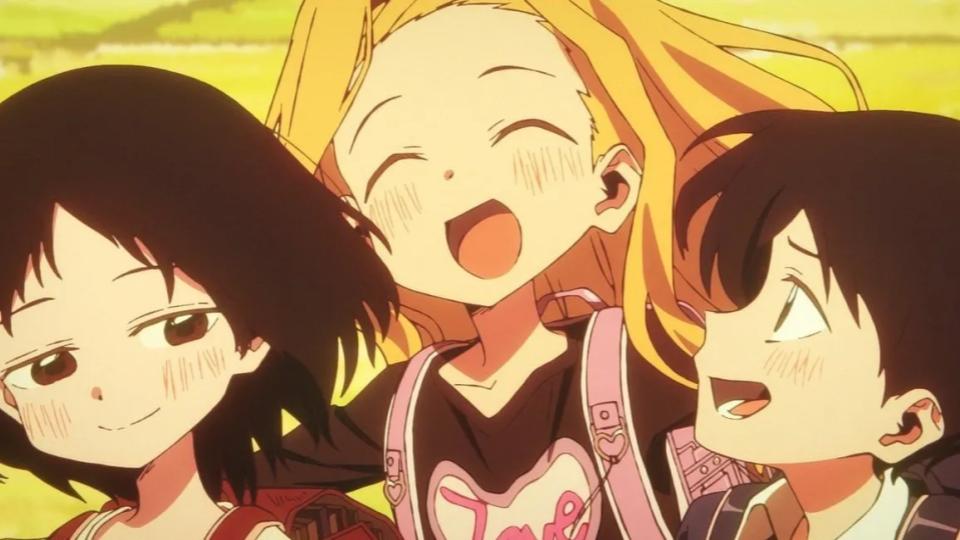
Some fans on the Internet Movie Database expressed their feelings on the show, with many praising it. One comment goes: “The soft, almost childlike animation style only made the pain feel more real – like it was hiding something tragic beneath the surface. It’s a short watch, but one that left a heavy impact on me and lingered in my mind long after it ended.” Another adds on about the animation and states: “The animation is fluid and deliberate, especially in moments of heightened emotion. Character movements are subtly expressive-just a glance or shift in posture can carry the weight of a thousand words. This level of detail in the animation truly enhances the storytelling and allows the viewer to feel deeply connected to the characters.”
Overall, this anime is currently one of my favorites. It’s unforgettable in the sense that it illustrates trauma, pain, and grief. It also does the manga justice and tackles a bunch of the same events in the anime adaptation. Almost every episode left me pondering or even in tears! Something that is undeniably well shown is how the anime underscores the melancholic circumstances of some children in real life. Unfortunately, many tend to suffer from the themes represented in the show, and the show’s kindness and goodness may not be enough to save those in the darkest of situations. In real life, understanding and confronting complex realities is essential to preserving hope and preventing falling into despair.